DESIGN AS CODE - PENCIL.DEV + CODEX
Design intent translated into production-ready outcomes
Key Tools & Techniques
- Pencil.dev
- Pencil MCP
- OpenAI Codex
- Custom Skills & Workflows
- Next.js
- Tailwind
01
Challenge
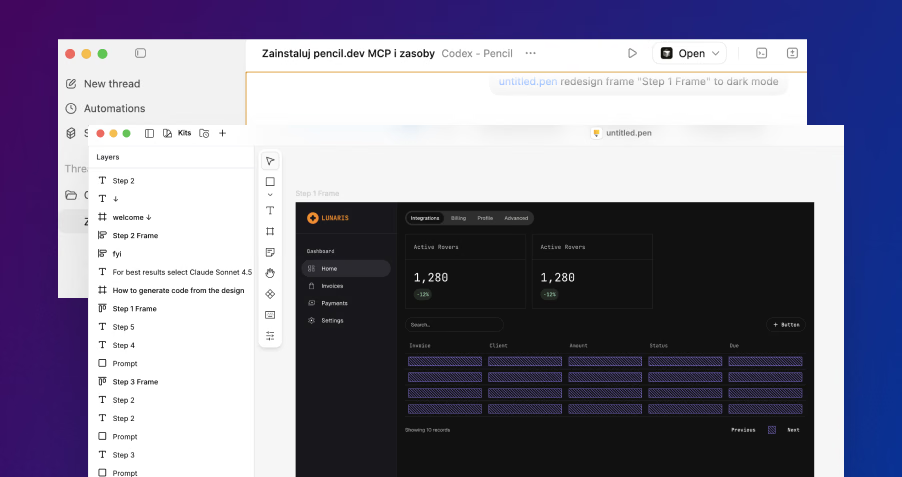
I validated a bi-directional design model where design and development evolved together on one source of truth, reducing handoff friction, shortening iteration cycles, and accelerating decision-to-delivery time. The process produced a working, testable invoice experience with aligned UI and behavior, increasing stakeholder confidence and lowering rework risk.
02
Process
Pixel-perfect implementation started directly from Pencil design, so each UI block was translated into production code without a separate handoff interpretation phase.
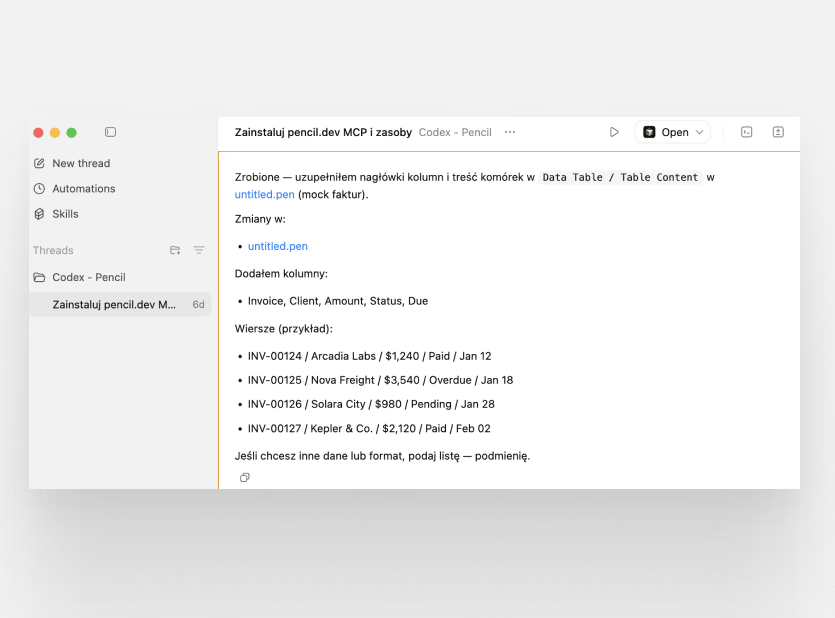
Code changes were continuously reflected back into the source design file, creating a bi-directional workflow where implementation and design stayed synchronized.
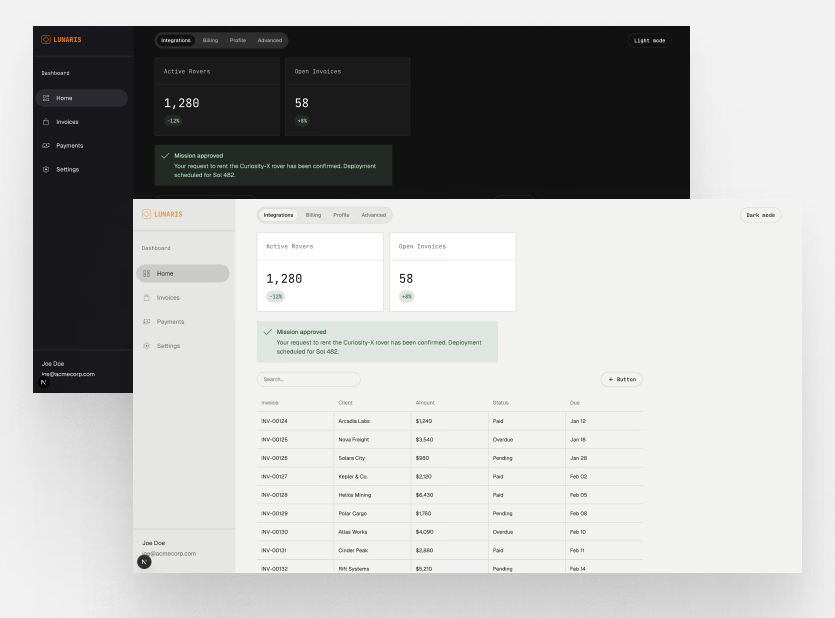
AI was used to build and refine design tokens and themes (including spacing and light/dark behavior), improving consistency and reducing manual styling decisions.
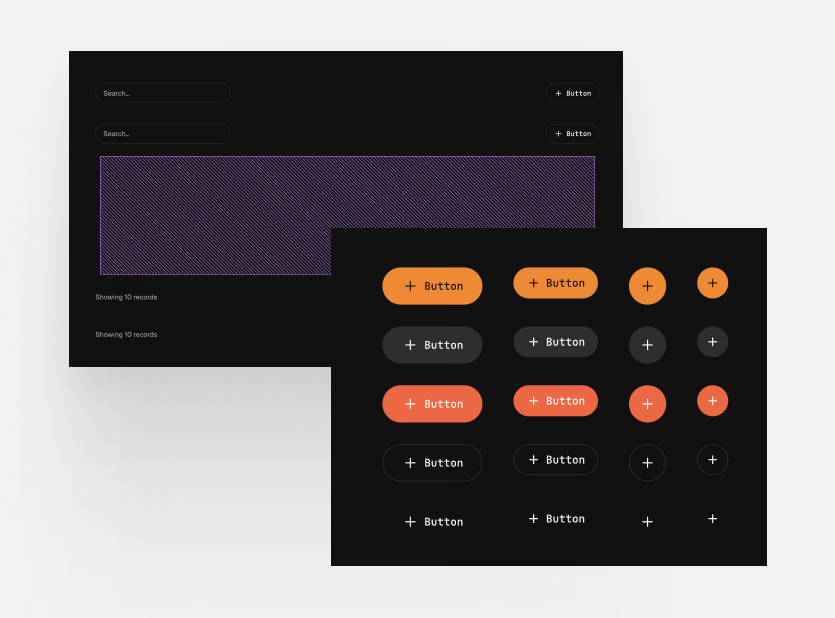
The process established a practical Pencil-based synergy between code and design: one connected loop for design intent, implementation, and iteration, with faster delivery and lower rework risk.
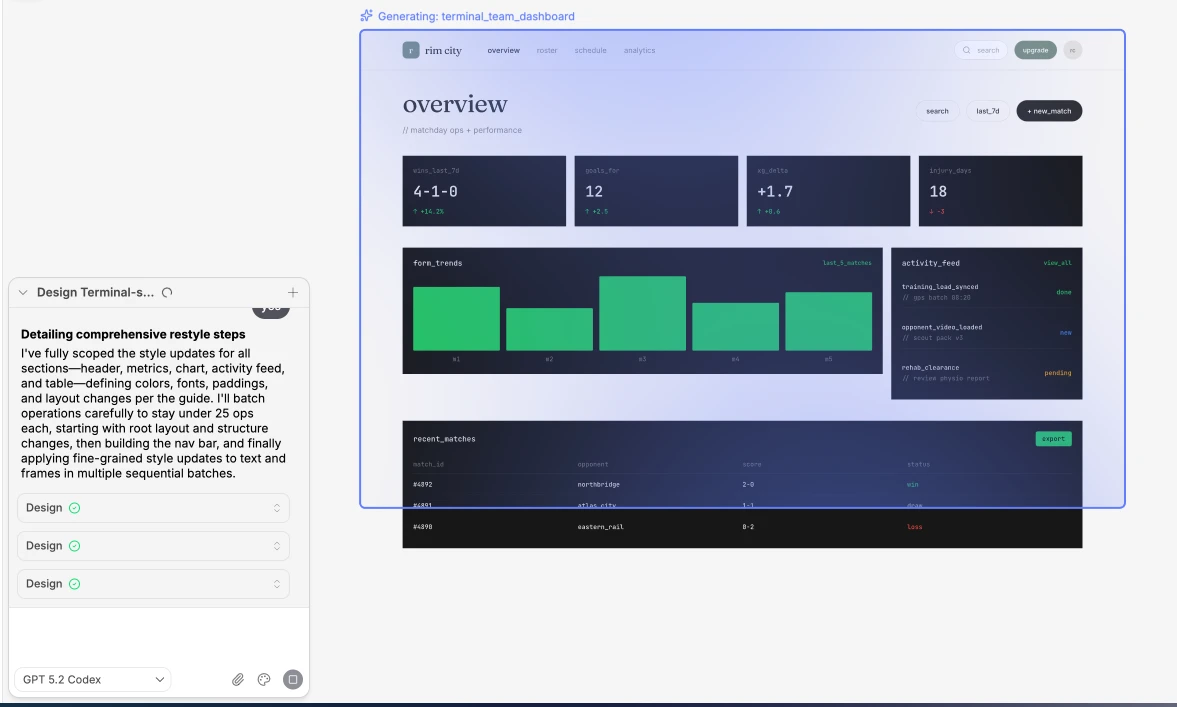
Pencil further enhances this workflow by integrating Claude and OpenAI Codex to automate UI generation, creating an even more versatile bridge between creative intent and production-ready code.
03
Key Takeaways
Shortened the path from idea to stakeholder-ready product output, enabling earlier feedback and decision-making.
Continuous alignment between design intent and product behavior reduced ambiguity and minimized downstream rework risk.
The result functions as a realistic product prototype for demos, validation, and planning, rather than a static visual artifact.