Best Western Hotels
Optimizing the employee efficiency with AI
- Industry
- Travel & Hospitality
- My role
- Experience Consultant / Lead Designer & Process Facilitator
- Year
- 2023
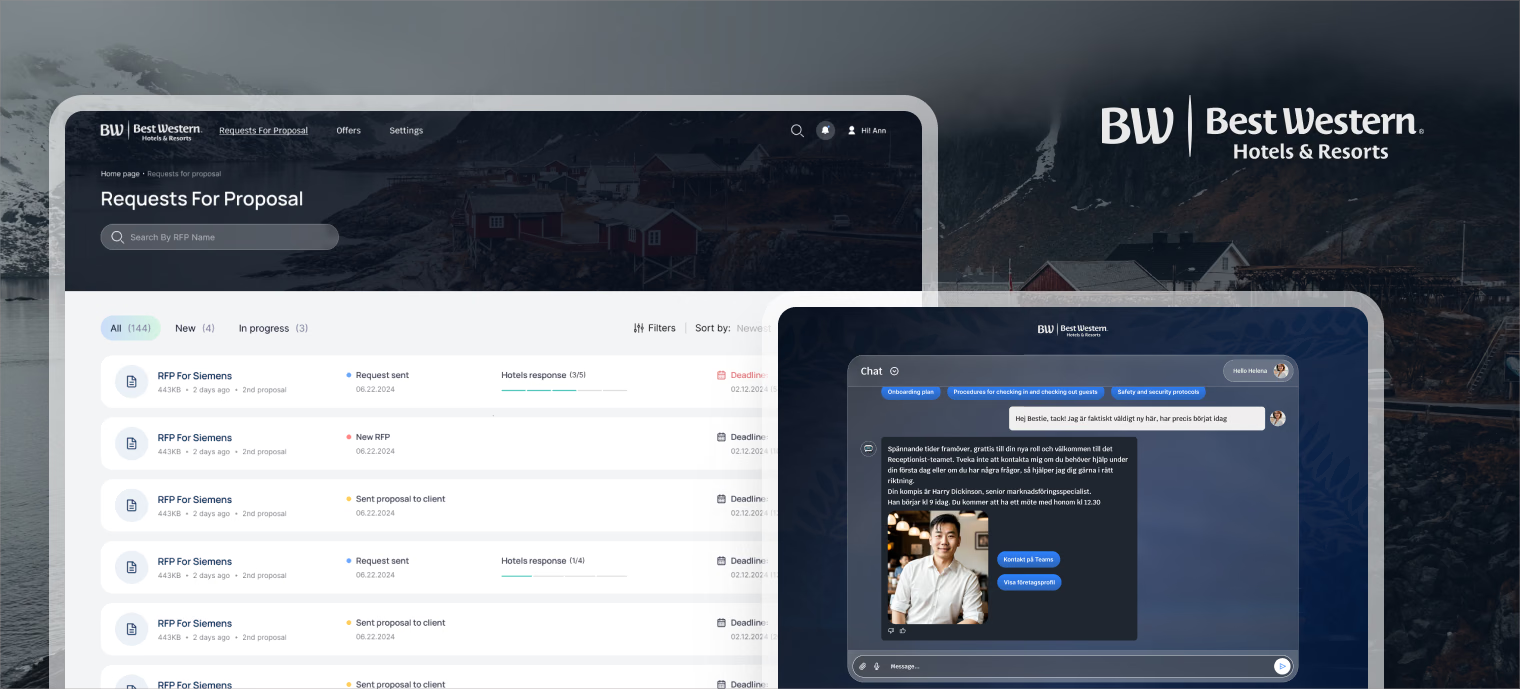
Best Western Hotels Optimizing the employee efficiency with AI
Industry
Travel & Hospitality
My role
Experience Consultant / Lead Designer & Process Facilitator
Year
2023
About the company
Best Western Hotels Scandinavia has solidified its status as the largest hotel network in Sweden with 135 properties, contributing to a total of 180 hotels across the region
Objective
Identify use cases to leverage AI for enhancing the employee and traveler experience with AI. Aim to improve satisfaction, operational efficiency, workload reduction, and revenue growth
PHASE 1: Discover AI-driven growth opportunities
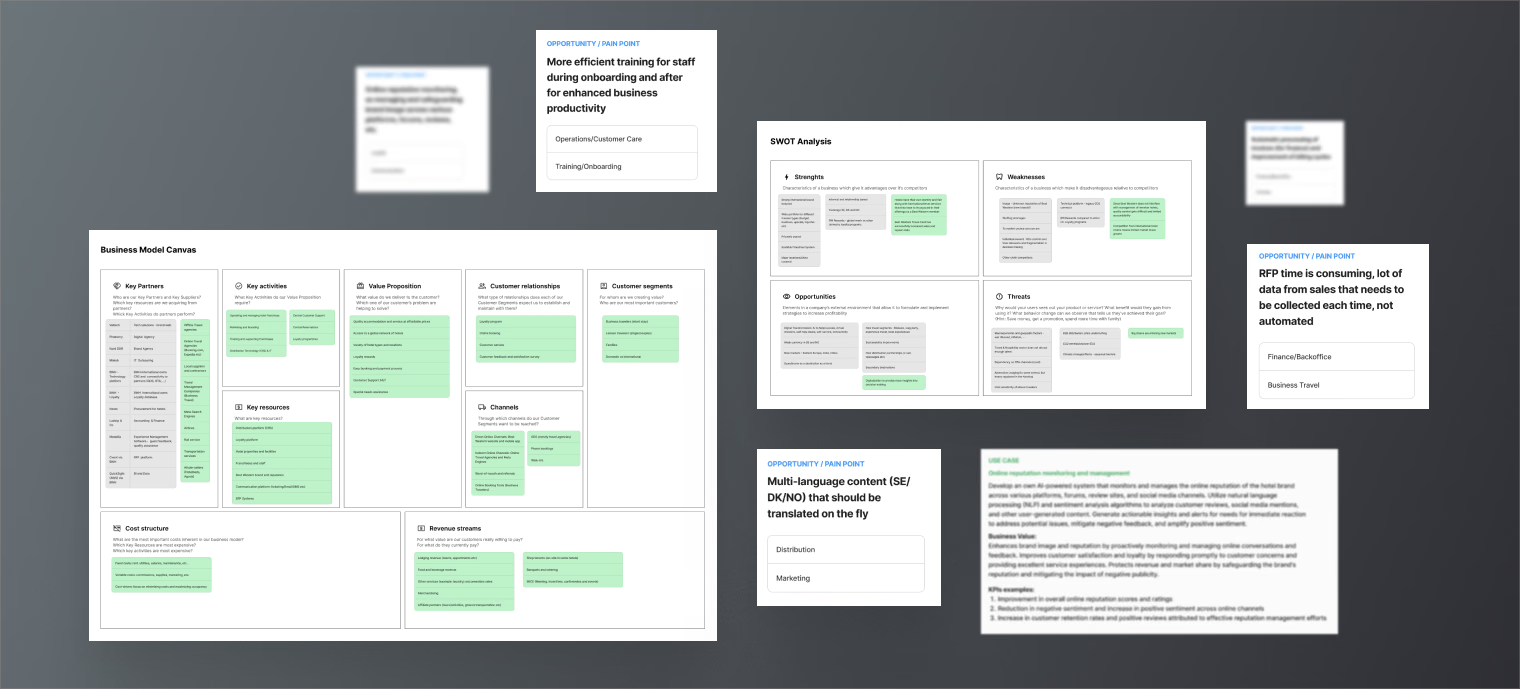
In the first phase I gathered insight into the business model and, working closely with stakeholders, pinpointed the critical pain points and opportunities — the focus areas for AI- and automation-driven use cases in the phases that followed.
12
Main pain points and opportunities identified
20
Drafted use cases addressing the needs
7
Domain experts on customer side
4
Competitors Analysed
PHASE 2: Refining and advancing use cases through collaborative workshops
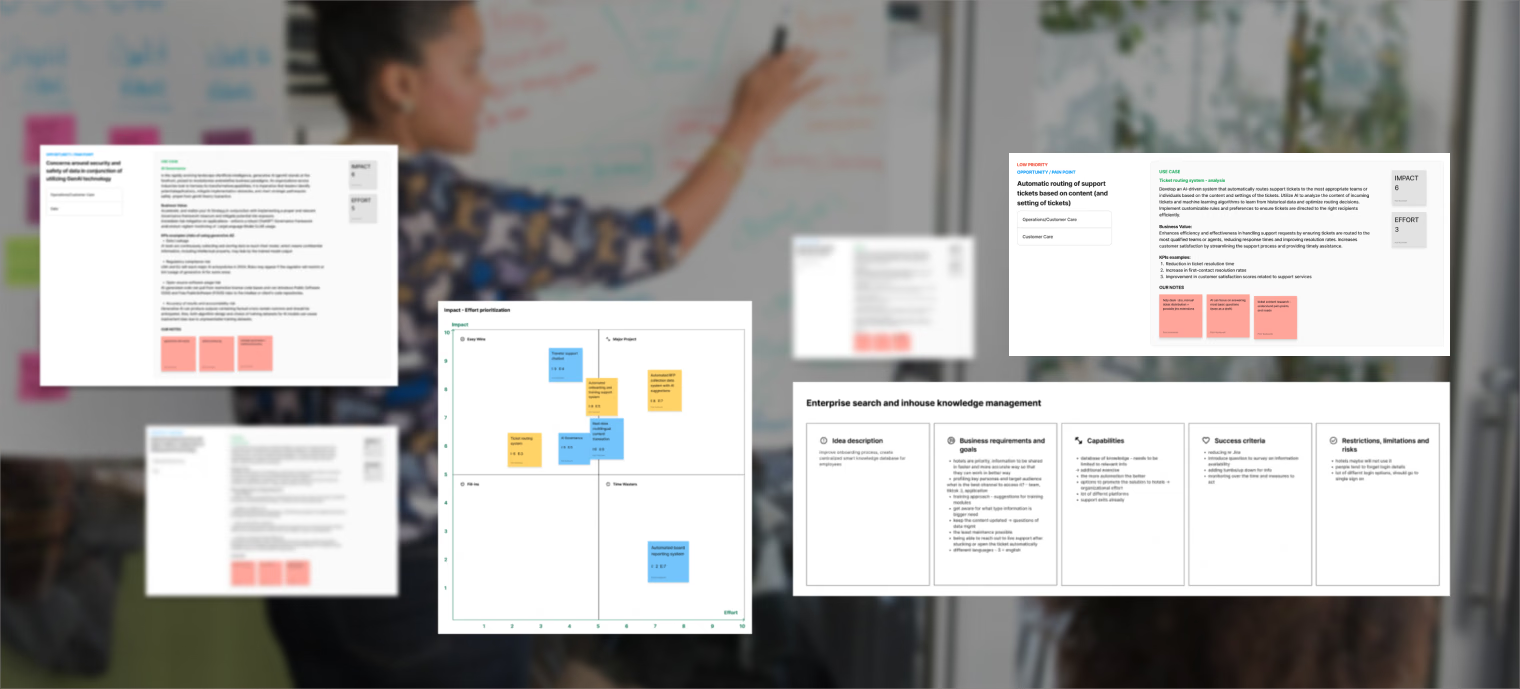
I facilitated workshops with key stakeholders in Stockholm — pressure-testing the draft use cases and enriching them in ideation, then prioritizing by value-to-effort so we backed the ideas worth building, not just the exciting ones.
3
Prioritized use cases
8
Valuable use cases for the future
11
On-site workshop participants
PHASE 3: Solution Design
Two of the chosen use cases needed interface design — a chatbot and an AI-driven RFP assistant. The ambition was an aspirational vision that still aligned with business objectives and stayed technically feasible.
Video: Chatbot Concept
Multilingual chatbot supporting front desk employees
Video: AI-driven RFP Assistant Concept
Tool automating heavy-burden steps of the RFP analysis process
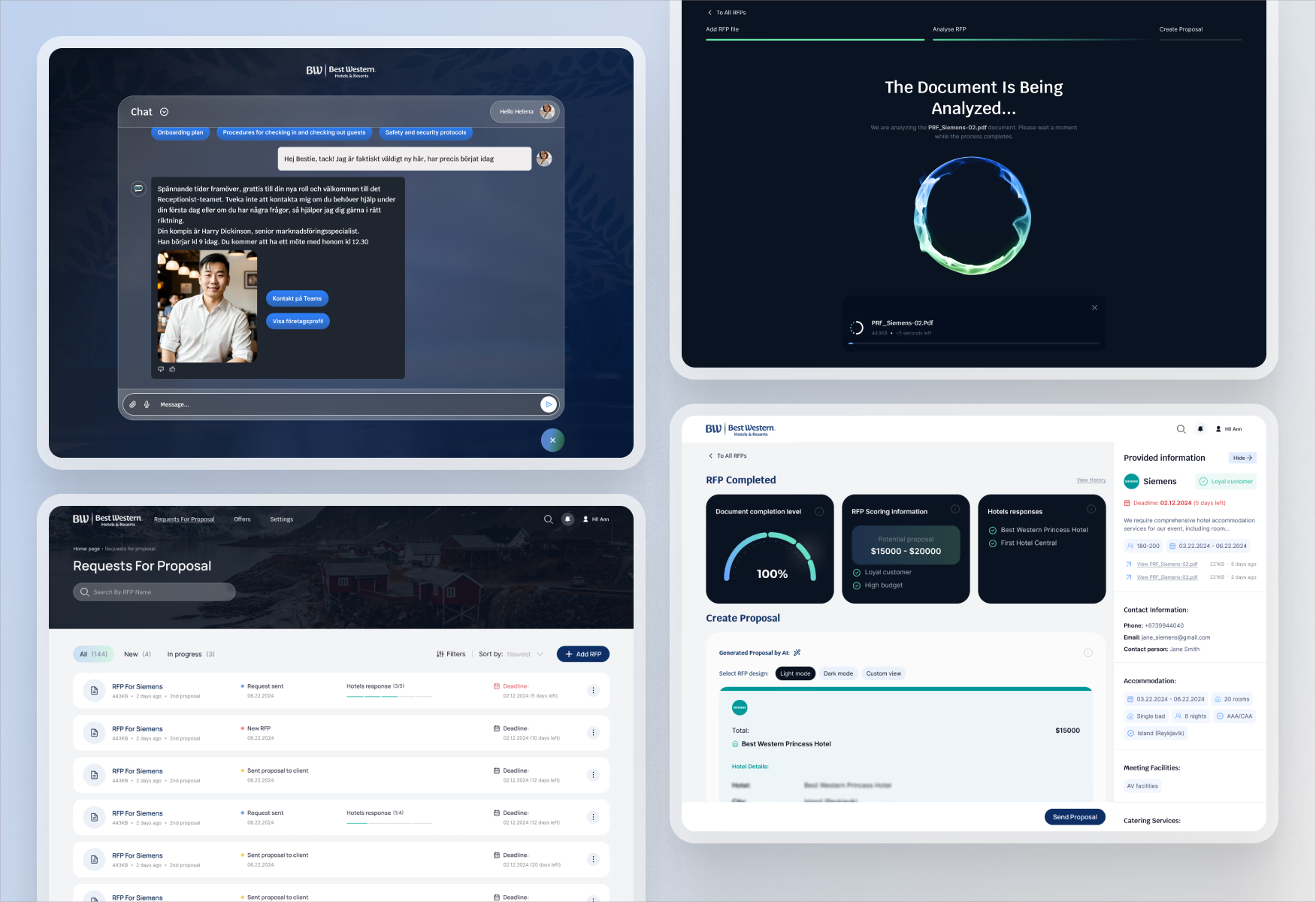
Conceptual User Interface
PHASE 4: MVP implementation planning
With the concept validated by stakeholders, I prepared the roadmap and planned the technical path to implementation.
Highlights
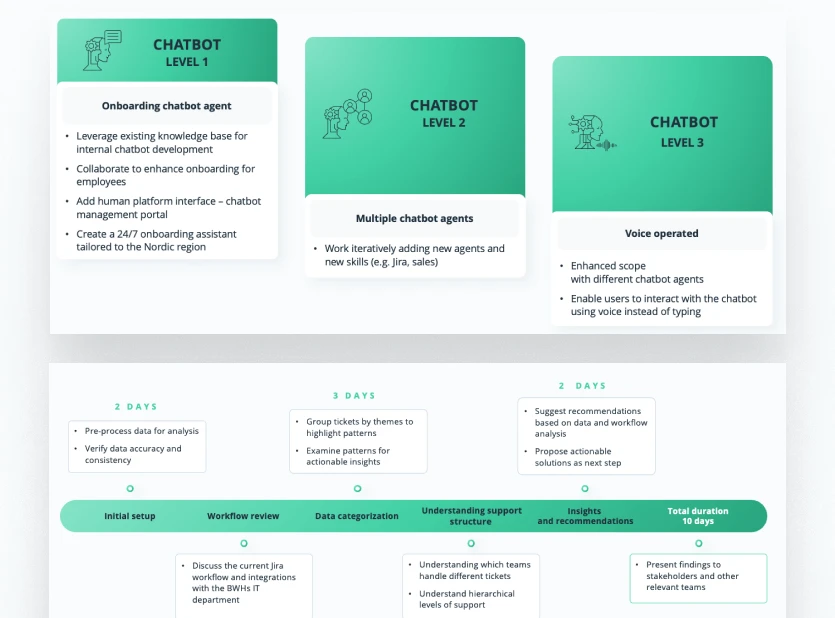
We have prepared a roadmap and an initial product development plan to quickly deliver business value
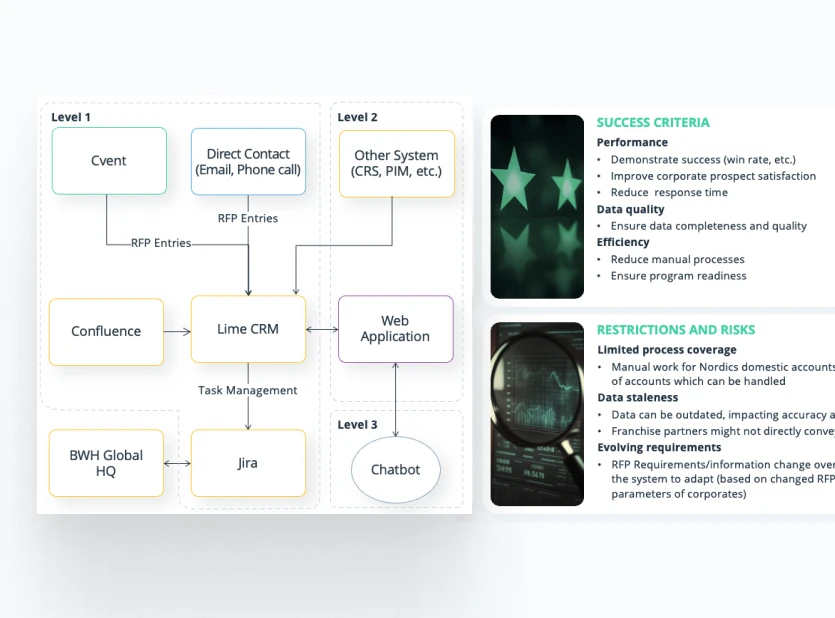
Each solution is described to combine product, technology and business perspectives
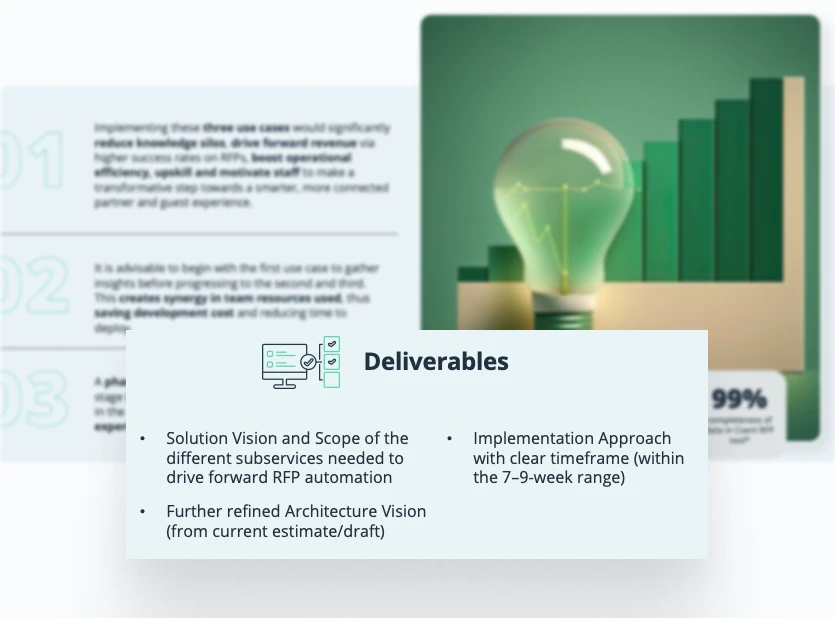
The implementation plan also included an analysis of KPls and key deliverables to support the client in securing the budget internally
Customer appreciation
Design Thinking Workshop on leveraging AI/ML for enhancing the employee and traveler experience resulted in comprehensive, pragmatic solutions tailored to our business.
The workshop offered clear implementation steps and valuable insights to support future decisions, ensuring exceptional customer experiences through tangible technology applications
Monika Moser, Chief Technology Office / Best Western Hotels
Outcomes
A comprehensive problem-solving approach - from business challenge dentification to solution development
Iterative implementation plan and development roadmap of a solution focused on delivering immediate business value
AI chatbot concept designed to speed up new-employee onboarding by proactively surfacing relevant training materials
RFP assistant concept designed to cut manual work — automating the search and transfer of data between systems
Best Western Hotels Optimizing the employee efficiency with AI
Industry
Travel & Hospitality
My role
Experience Consultant / Lead Designer & Process Facilitator
Year
2023
About the company
Best Western Hotels Scandinavia has solidified its status as the largest hotel network in Sweden with 135 properties, contributing to a total of 180 hotels across the region
Objective
Identify use cases to leverage AI for enhancing the employee and traveler experience with AI. Aim to improve satisfaction, operational efficiency, workload reduction, and revenue growth
PHASE 1: Discover AI-driven growth opportunities
In the first phase I gathered insight into the business model and, working closely with stakeholders, pinpointed the critical pain points and opportunities — the focus areas for AI- and automation-driven use cases in the phases that followed.
12
Main pain points and opportunities identified
20
Drafted use cases addressing the needs
7
Domain experts on customer side
4
Competitors Analysed
PHASE 2: Refining and advancing use cases through collaborative workshops
I facilitated workshops with key stakeholders in Stockholm — pressure-testing the draft use cases and enriching them in ideation, then prioritizing by value-to-effort so we backed the ideas worth building, not just the exciting ones.
3
Prioritized use cases
8
Valuable use cases for the future
11
On-site workshop participants
PHASE 3: Solution Design
Two of the chosen use cases needed interface design — a chatbot and an AI-driven RFP assistant. The ambition was an aspirational vision that still aligned with business objectives and stayed technically feasible.
Video: Chatbot Concept
Multilingual chatbot supporting front desk employees
Video: AI-driven RFP Assistant Concept
Tool automating heavy-burden steps of the RFP analysis process
Conceptual User Interface
PHASE 4: MVP implementation planning
With the concept validated by stakeholders, I prepared the roadmap and planned the technical path to implementation.
Highlights
We have prepared a roadmap and an initial product development plan to quickly deliver business value
Each solution is described to combine product, technology and business perspectives
The implementation plan also included an analysis of KPls and key deliverables to support the client in securing the budget internally
Customer appreciation
Design Thinking Workshop on leveraging AI/ML for enhancing the employee and traveler experience resulted in comprehensive, pragmatic solutions tailored to our business.
The workshop offered clear implementation steps and valuable insights to support future decisions, ensuring exceptional customer experiences through tangible technology applications
Monika Moser, Chief Technology Office / Best Western Hotels
Outcomes
A comprehensive problem-solving approach - from business challenge dentification to solution development
Iterative implementation plan and development roadmap of a solution focused on delivering immediate business value
AI chatbot concept designed to speed up new-employee onboarding by proactively surfacing relevant training materials
RFP assistant concept designed to cut manual work — automating the search and transfer of data between systems