DKV
Transforming the Fleet Management Ecosystem
- Industry
- Mobility
- My role
- Discovery Lead, Design Consultant
- Year
- 2023
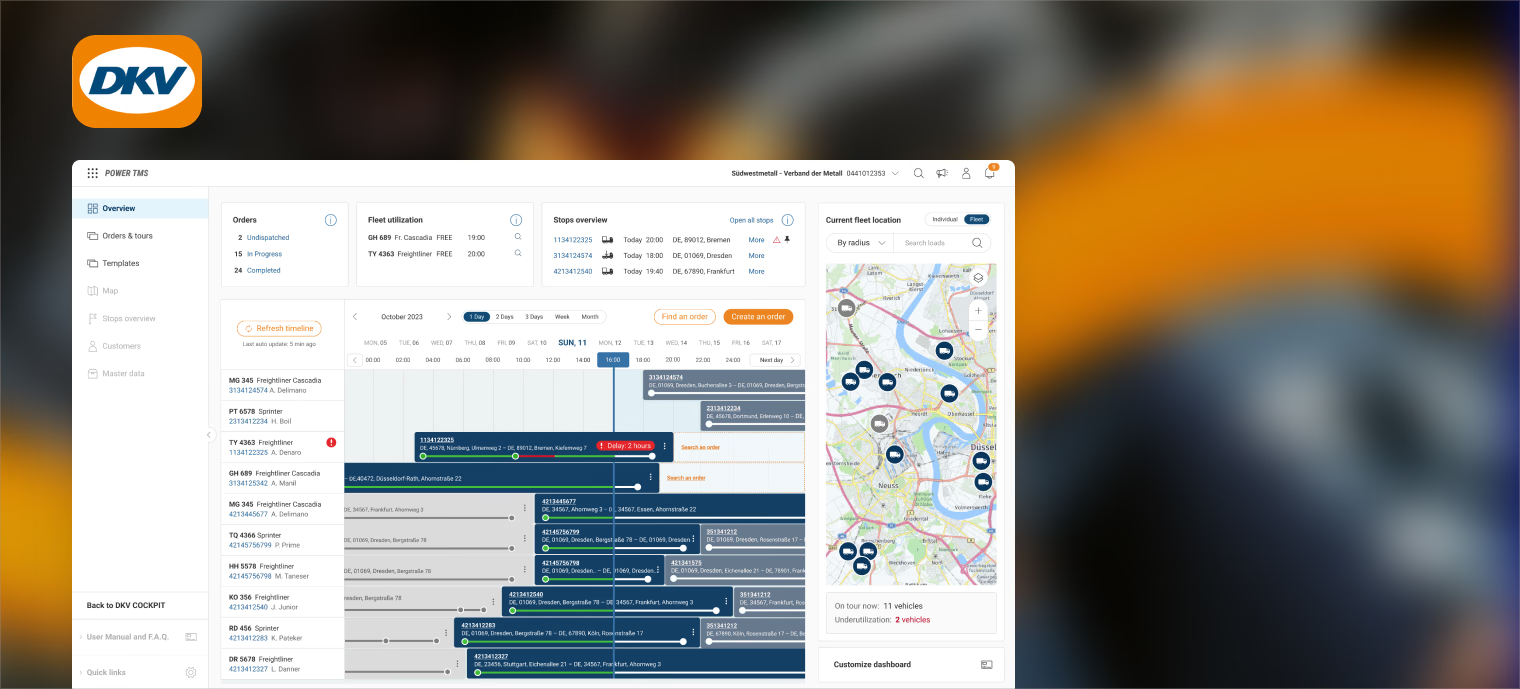
DKV Transforming the Fleet Management Ecosystem
Industry
Mobility
My role
Discovery Lead, Design Consultant
Year
2023
Challenge
The challenge centered on using detailed user research and competitor analysis to design a unified Transport Management Solution (TMS). The goal was to overcome existing market gaps and tool fragmentation by consolidating complex fleet management functions into one intuitive platform, directly driving customer loyalty and maximizing client operational efficiency within the DKV ecosystem.
PHASE 1: Product Discovery
As Discovery Lead, my first objective was to deeply understand how the crucial small- and mid-size segment actually worked across digital, non-digital, and existing TMS tools.
I systematically contrasted those behaviors and needs against competitor offerings to find clear room for differentiation — mapping daily tasks, pinpointing inefficiencies, and surfacing the pain points in how they used their current tools.
Those insights were what made the new TMS specific rather than generic — tailored to this segment’s real challenges, closing gaps in the market, and fitting cleanly into the wider DKV ecosystem.
Highlights
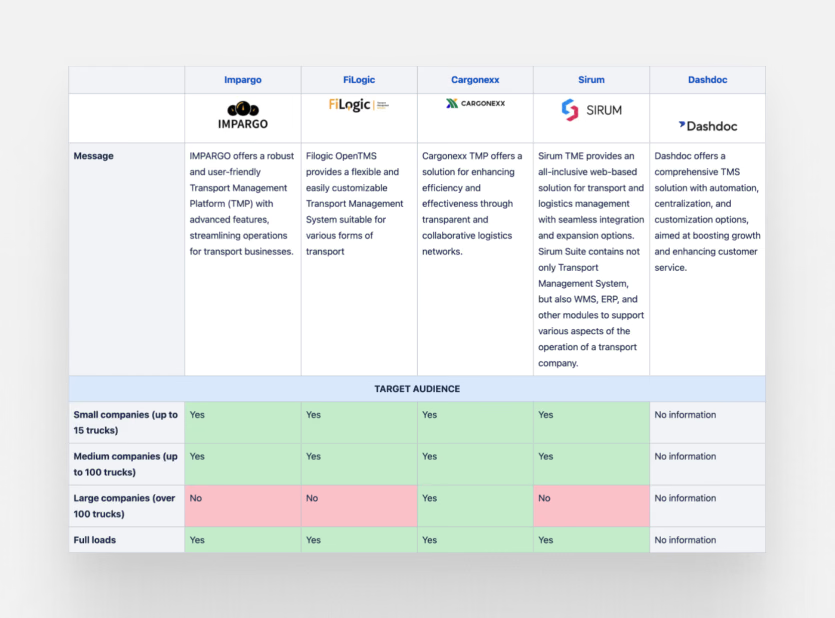
Defined the market baseline and innovation gaps through a detailed competitor analysis
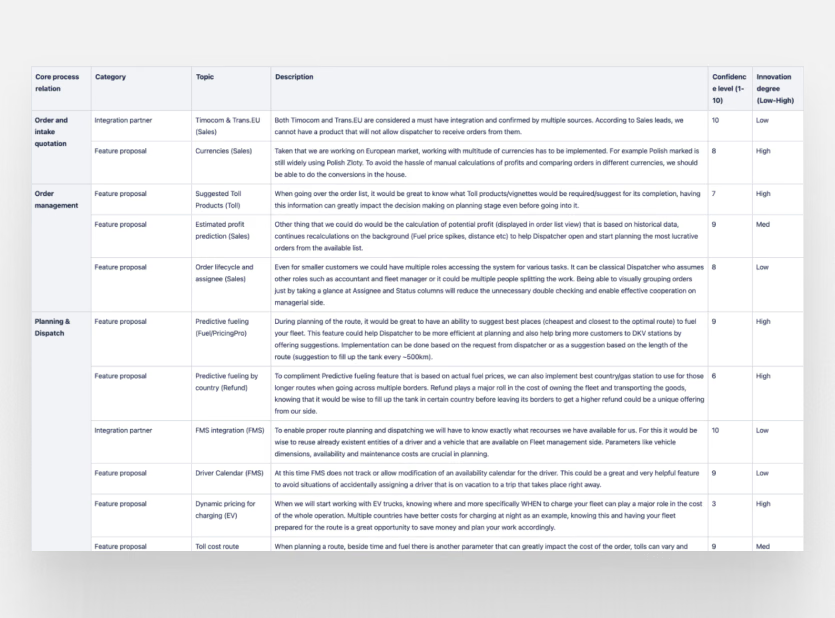
Engaged key DKV representatives to map existing product limitations and business constraints
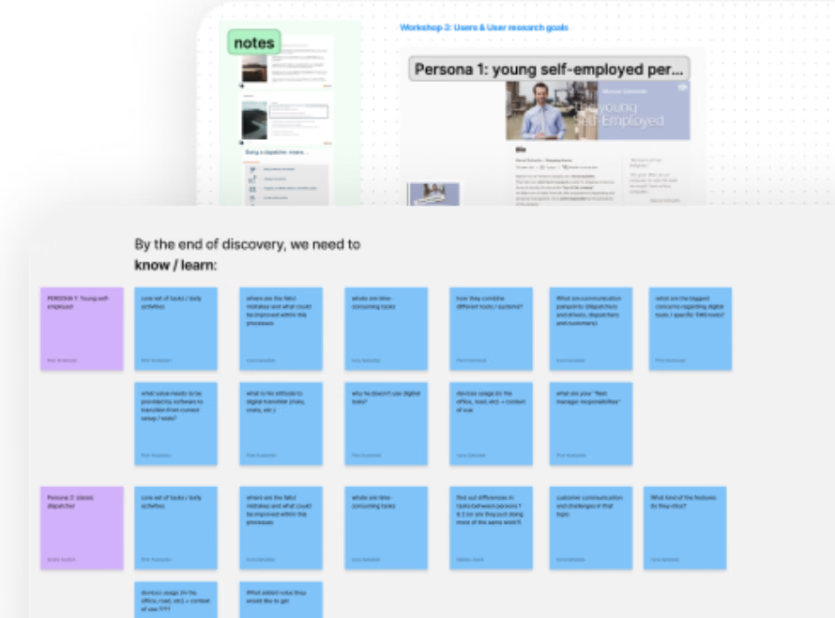
Conducted detailed interviews with fleet managers and operators to gather deep behavioral and pain point insights
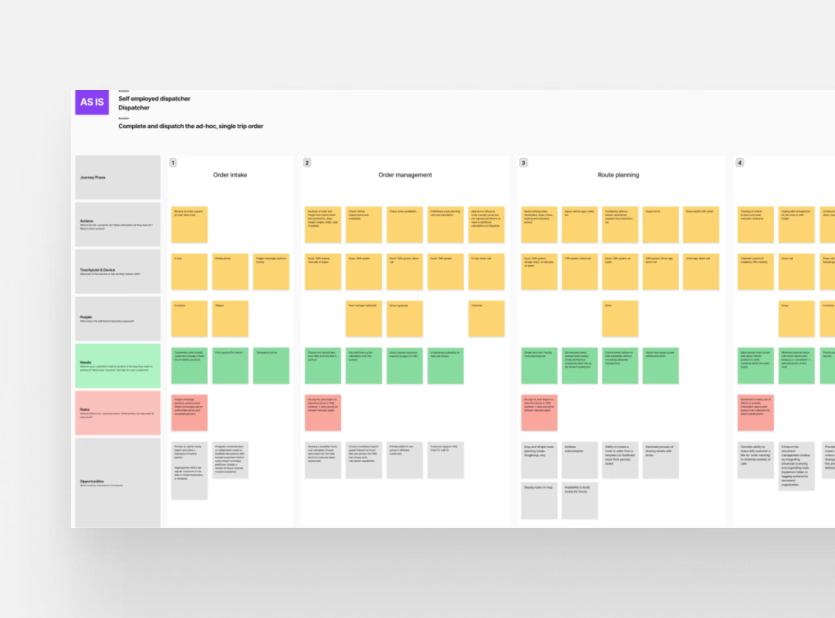
Current-State Customer Journey Map, which visually captured the entire workflow, helping the team align on real-world inefficiencies and pain points
PHASE 2: Hypotheses Generation
From there I ran the hypotheses-generation stage — the bridge between discovery and solution design that kept the work evidence-based and aimed at the right problems and outcomes.
I synthesized three inputs — analysis of key business processes, the specific pain points from user interviews, and competitive weaknesses — into testable hypotheses that tied each proposed solution to a measurable customer behavior, which set up the definition of the new TMS.
Key processes to be focused on
Onboarding / Organisational profile set up: Streamlining this process, which is crucial for quick customer adoption
Order management: Addressing the co-existence of fixed weekly schedules and urgent ad-hoc orders.
Order execution: Meeting the customer need for real-time tracking, visibility, and timely updates on shipments.
Planning & Disposition: Setting realistic expectations that S&M customers do not rely on complex historical data analysis for route planning.
PHASE 3: Solution Design
Strategy Creation Stage
This stage turned the insight into a defined roadmap and vision, built on two activities: an ideation workshop converting problems into solutions for areas like route planning and cost calculation, and a value-proposition workshop articulating what made the new system distinct.
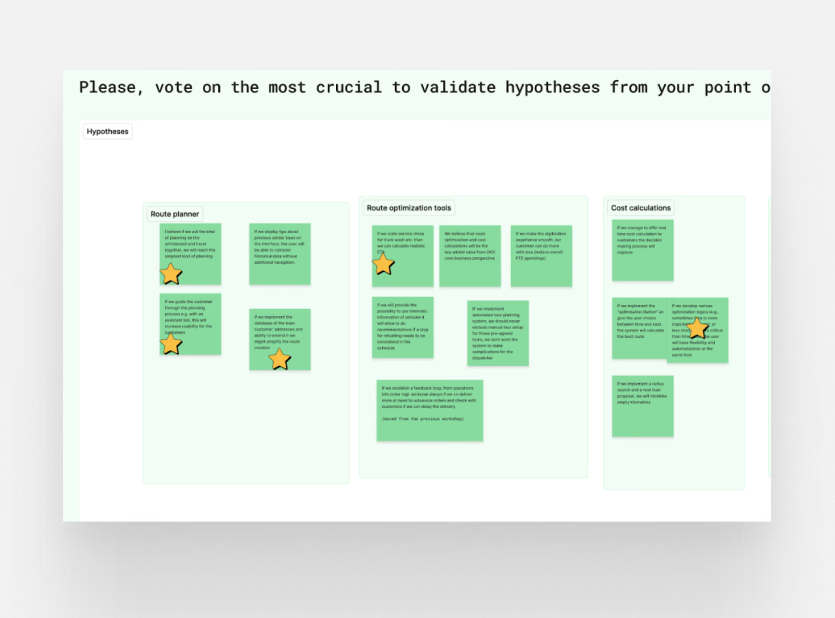
Ideation Workshop: The workshop goal was to generate solutions and formulate them into statements on how we may solve the problem related to dispatchers' tasks
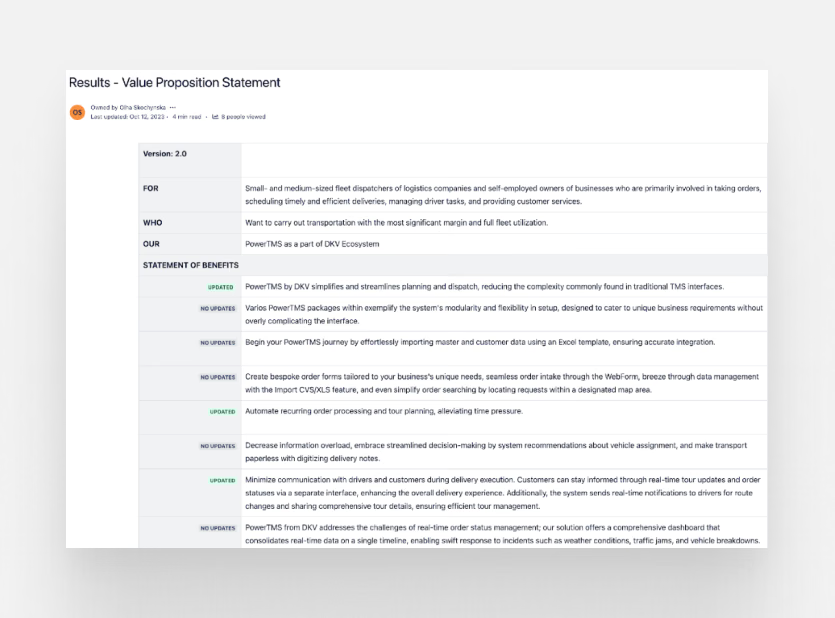
Value Proposition Workshop: The workshop goal was to generate and articulate the unique benefits and advantages that PowerTMS product provides to the customers.
Proof of Concept design & validation
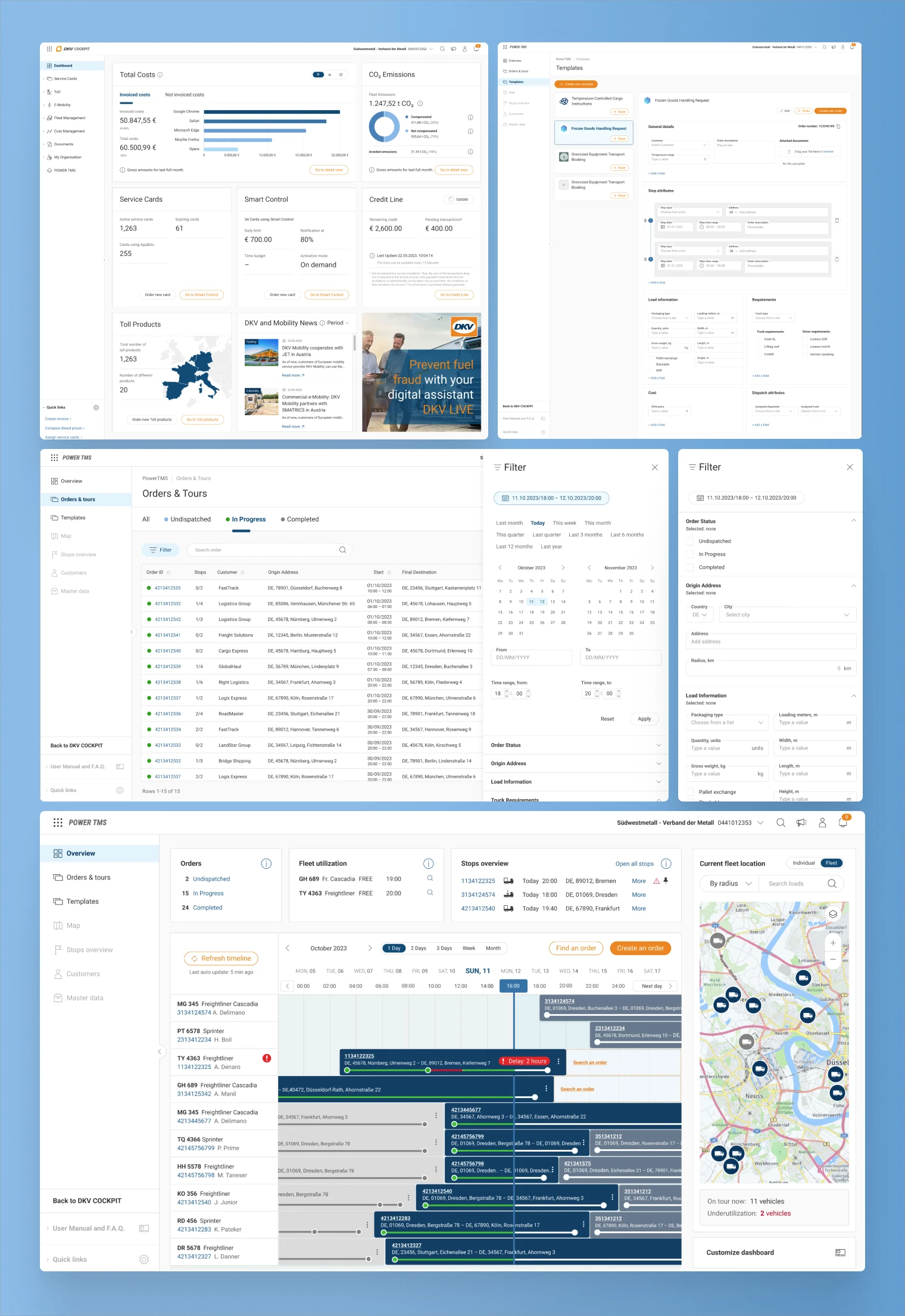
The UX stream delivered interactive prototypes across four critical dispatching scenarios, which I tested in remote moderated sessions with participants from several European markets — Germany, Romania, Slovakia, Latvia. The analysis gave data-backed confidence in the TMS direction and set up the refinement phase.
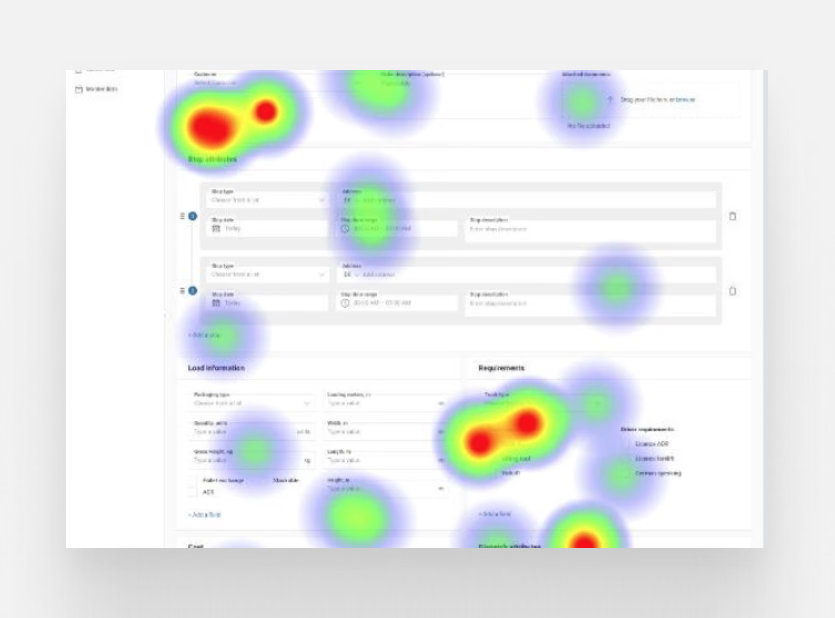
While remote moderated sessions provided essential qualitative data, utilizing Maze software gave us access to quantitative metrics like heatmaps and enabled supplementary tasks (e.g, sorting and rating)
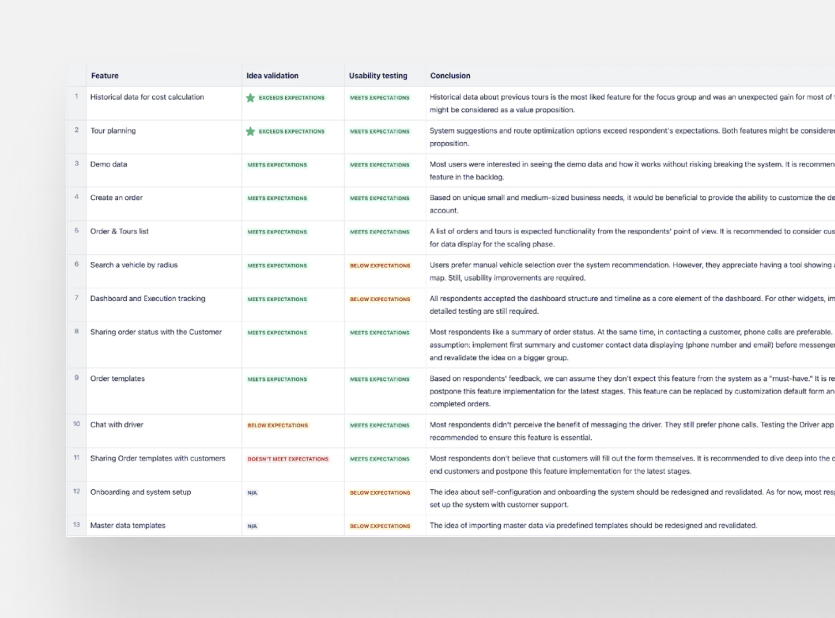
Our testing methodology went beyond basic usability, allowing us to evaluate the interface layer and identify significant usage differences related to specific user locations, which was crucial for the final localization strategy
PHASE 4: Continuous Producy Discovery & Delivery
Positive validation cut business risk and gave the build a solid foundation. After preparing the roadmap and backlog, I moved into construction with a Dual-Track Agile approach, running discovery and design alongside ongoing delivery.
Key Outcomes
I engineered an innovative, effective business-solution concept that delivers high sales value and significant client value while strictly minimizing risk — through data-driven decisions and rigorous early validation
By engaging diverse stakeholders, I embedded the product within the internal ecosystem — enabling tangible business synergy, seamless data exchange, and efficient reuse of shared technical components and APIs
Early discussions with key clients yielded promising results, confirming strong market interest and positive reception for the new TMS concept. This validation provides a solid mandate for full development.
DKV Transforming the Fleet Management Ecosystem
Industry
Mobility
My role
Discovery Lead, Design Consultant
Year
2023
Challenge
The challenge centered on using detailed user research and competitor analysis to design a unified Transport Management Solution (TMS). The goal was to overcome existing market gaps and tool fragmentation by consolidating complex fleet management functions into one intuitive platform, directly driving customer loyalty and maximizing client operational efficiency within the DKV ecosystem.
PHASE 1: Product Discovery
As Discovery Lead, my first objective was to deeply understand how the crucial small- and mid-size segment actually worked across digital, non-digital, and existing TMS tools.
I systematically contrasted those behaviors and needs against competitor offerings to find clear room for differentiation — mapping daily tasks, pinpointing inefficiencies, and surfacing the pain points in how they used their current tools.
Those insights were what made the new TMS specific rather than generic — tailored to this segment’s real challenges, closing gaps in the market, and fitting cleanly into the wider DKV ecosystem.
Highlights
Defined the market baseline and innovation gaps through a detailed competitor analysis
Engaged key DKV representatives to map existing product limitations and business constraints
Conducted detailed interviews with fleet managers and operators to gather deep behavioral and pain point insights
Current-State Customer Journey Map, which visually captured the entire workflow, helping the team align on real-world inefficiencies and pain points
PHASE 2: Hypotheses Generation
From there I ran the hypotheses-generation stage — the bridge between discovery and solution design that kept the work evidence-based and aimed at the right problems and outcomes.
I synthesized three inputs — analysis of key business processes, the specific pain points from user interviews, and competitive weaknesses — into testable hypotheses that tied each proposed solution to a measurable customer behavior, which set up the definition of the new TMS.
Key processes to be focused on
Onboarding / Organisational profile set up: Streamlining this process, which is crucial for quick customer adoption
Order management: Addressing the co-existence of fixed weekly schedules and urgent ad-hoc orders.
Order execution: Meeting the customer need for real-time tracking, visibility, and timely updates on shipments.
Planning & Disposition: Setting realistic expectations that S&M customers do not rely on complex historical data analysis for route planning.
PHASE 3: Solution Design
Strategy Creation Stage
This stage turned the insight into a defined roadmap and vision, built on two activities: an ideation workshop converting problems into solutions for areas like route planning and cost calculation, and a value-proposition workshop articulating what made the new system distinct.
Ideation Workshop: The workshop goal was to generate solutions and formulate them into statements on how we may solve the problem related to dispatchers' tasks
Value Proposition Workshop: The workshop goal was to generate and articulate the unique benefits and advantages that PowerTMS product provides to the customers.
Proof of Concept design & validation
The UX stream delivered interactive prototypes across four critical dispatching scenarios, which I tested in remote moderated sessions with participants from several European markets — Germany, Romania, Slovakia, Latvia. The analysis gave data-backed confidence in the TMS direction and set up the refinement phase.
While remote moderated sessions provided essential qualitative data, utilizing Maze software gave us access to quantitative metrics like heatmaps and enabled supplementary tasks (e.g, sorting and rating)
Our testing methodology went beyond basic usability, allowing us to evaluate the interface layer and identify significant usage differences related to specific user locations, which was crucial for the final localization strategy
PHASE 4: Continuous Producy Discovery & Delivery
Positive validation cut business risk and gave the build a solid foundation. After preparing the roadmap and backlog, I moved into construction with a Dual-Track Agile approach, running discovery and design alongside ongoing delivery.
Key Outcomes
I engineered an innovative, effective business-solution concept that delivers high sales value and significant client value while strictly minimizing risk — through data-driven decisions and rigorous early validation
By engaging diverse stakeholders, I embedded the product within the internal ecosystem — enabling tangible business synergy, seamless data exchange, and efficient reuse of shared technical components and APIs
Early discussions with key clients yielded promising results, confirming strong market interest and positive reception for the new TMS concept. This validation provides a solid mandate for full development.